
The Future of Short-Term Rentals: Tech Tools Every Host Should Be Using

Short-term rentals are not what they were five years ago. That is not nostalgia talking. It is reality, spreadsheets included.
What used to be a fairly hands-on, somewhat forgiving business has become faster, more regulated, and far more competitive. Guests expect hotel-level polish. Cities expect compliance. Platforms expect responsiveness that borders on psychic.
And hosts are left asking a reasonable question. Is all this tech actually helping, or just adding more things to manage?
The answer, inconveniently, is both. But some tools are no longer optional. They are the difference between a rental that quietly hums along and one that constantly needs rescuing.
The Shift: From Side Hustle to System
Short-term rentals used to reward effort. Now they reward systems.
This does not mean hosts need to turn into software engineers. It does mean that relying on memory, sticky notes, or a single booking platform is risky. Especially in markets like Seattle, where guest expectations are high and margins can tighten quickly.
Technology, when chosen carefully, does not remove the human element. It protects it.
That is where the future is heading.
Smart Communication Tools That Actually Save Time
Guest communication is the first place many hosts overestimate their capacity.
Replying quickly feels manageable. Until it is not. One late reply turns into a lukewarm review. A missed check-in message turns into confusion. Confusion turns into a support ticket. You get the idea.
Automated messaging tools are not about sounding robotic. The good ones allow tone control, timing, and context. Welcome messages. Check-in instructions. Gentle reminders. Follow-ups that feel thoughtful, not scripted.
This is especially effective when paired with a consistent approach to first-time guest communication that builds trust early. That early clarity often determines whether a guest feels confident or slightly on edge. And guests who feel confident tend to treat properties better. Funny how that works.
Dynamic Pricing Tools That Remove Guesswork
Pricing is where many hosts quietly leave money on the table. Or scare guests away.
Static pricing does not reflect demand shifts. Events. Seasonality. Even weather. Tech does.
Dynamic pricing tools analyze local demand, competitor rates, booking windows, and historical performance. They adjust nightly rates automatically. Not aggressively, but strategically.
There is a learning curve. Some hosts hesitate because they want control. That hesitation is understandable. But control does not always mean manual input. Sometimes it means setting rules and letting the system do the math.
When done right, pricing tools smooth out occupancy and reduce the stress of constant adjustments.
Smart Locks and Access Control Are No Longer “Extra”
Key exchanges are inefficient. Lockboxes get shared. Codes get reused longer than intended.
Smart locks eliminate most of that risk. They allow unique codes per stay, timed access, and remote management. They also reduce the awkwardness of late arrivals or early departures.
From a guest perspective, this aligns with expectations shaped by hotels and newer listings. From a host perspective, it creates a cleaner operational loop.
It also pairs well with secure self check-in systems that reduce guest confusion, which tends to show up in reviews more often than hosts expect.
Professional Photography Still Outperforms Algorithms
This is where tech does not replace fundamentals.
No pricing tool or channel manager can compensate for weak visuals. Guests scroll fast. Decisions are made in seconds. Photography still does the heavy lifting.
The difference today is how photography is used. High-resolution images optimized for mobile. Consistent lighting. Accurate representation. No bait-and-switch glamour shots.
Listings that invest here tend to perform better across platforms, not just one. That is why high-quality listing photos that increase booking confidence continue to outperform even in competitive markets.
Technology distributes. Photography convinces.
Compliance and Regulation Tools Are Becoming Critical
Short-term rental regulations are not getting simpler. Especially in cities like Seattle.
Tracking license renewals, tax requirements, occupancy rules, and reporting deadlines manually is risky. Fines are expensive. Suspensions are worse.
There are now tools designed to centralize compliance. They send reminders. Store documentation. Track changes in local rules.
This is not about paranoia. It is about staying operational.
Understanding local short-term rental compliance requirements in Seattle neighborhoods is part of running a sustainable rental. Tech just makes it harder to forget.
Sustainability Tech Is Quietly Influencing Bookings
Eco-friendly features used to be a bonus. Now they are part of the decision process for many guests.
Smart thermostats. Energy monitoring. Water-saving systems. Waste tracking. These tools reduce costs, yes. But they also speak to values.
Guests increasingly look for signals that a property is responsibly managed. Not perfect. Just thoughtful.
That is why eco-conscious vacation rental features that reduce environmental impact are becoming part of listing differentiation, even when not explicitly marketed.
Trend Tracking Tools Help Hosts Stay Ahead
The short-term rental market does not shift overnight. It drifts. Slowly. Then suddenly.
Trend tracking tools pull data from search behavior, booking windows, amenity preferences, and length of stay patterns. They help hosts adjust before performance dips.
For example, noticing increased demand for longer stays. Or a growing preference for dedicated workspaces. Or seasonal changes that no longer align with old assumptions.
Understanding emerging vacation rental trends shaping Seattle travel in 2025 allows hosts to adapt instead of react.
Where Property Managers Fit In
Technology helps. But it does not replace judgment.
This is where experienced property managers still matter. They understand how tools work together. Where automation helps. Where it hurts. And when a human response is still the better choice.
For hosts managing multiple properties, or simply valuing sanity, property managers often act as the integrators. They choose the right tech stack. They monitor performance. They step in when systems fail or guests do something unexpected.
Not everything should be automated. Knowing what not to automate is part of the value.
The Tech Stack Is a Means, Not the Strategy
The future of short-term rentals is not about chasing every new tool. It is about building a system that supports consistency.
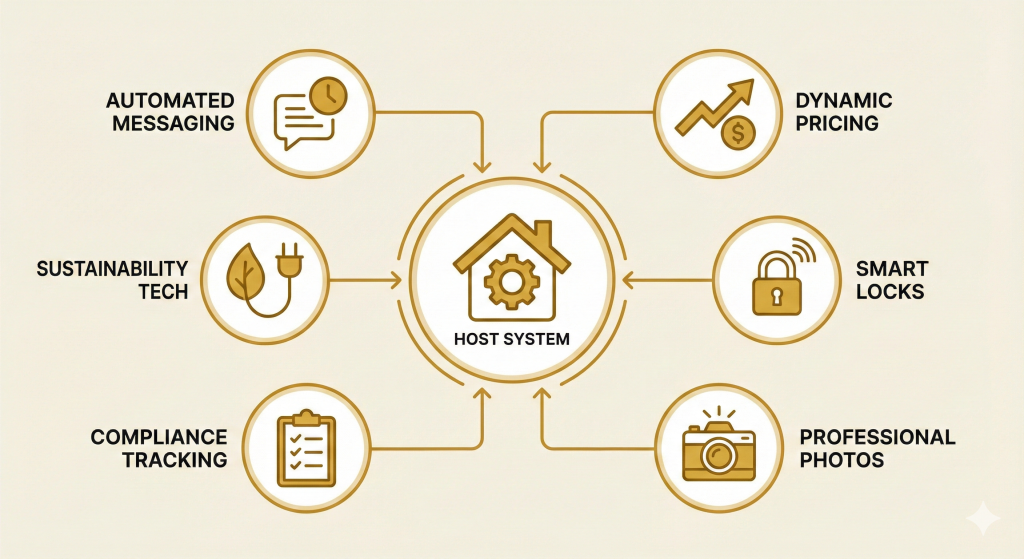
Clear communication. Fair pricing. Secure access. Compliance. Strong presentation. A few thoughtful amenities. And tech that reduces friction instead of adding it.
Guests do not care how many tools are running in the background. They care about how smooth the stay feels.
That is the metric that still matters.
A Practical Next Step
For hosts feeling overwhelmed by options, the best move is not adopting everything at once. It is auditing what currently causes friction. Late replies. Pricing uncertainty. Operational blind spots.
From there, technology becomes targeted. Purposeful.
And sometimes, it helps to not do it alone.
At Book It Vacation Rentals, we believe in building systems that support real hosting, not just dashboards. We have seen what works, what breaks, and what quietly improves guest experience over time. For hosts looking to future-proof their rentals without losing the human touch, working together is often the simplest upgrade.
FAQs
What tech tools are most important for short-term rental hosts?
A: Communication automation, dynamic pricing, smart locks, and compliance tracking tools offer the biggest operational impact.
Do dynamic pricing tools really increase revenue?
A: When configured correctly, they adjust rates based on demand and trends, often improving occupancy and overall income.
Are smart locks worth the investment?
A: Yes. They improve security, reduce guest confusion, and eliminate manual key exchanges.
How does technology help with guest experience?
A: Faster responses, smoother check-ins, clearer instructions, and consistent expectations all contribute to better reviews.
Should hosts manage tech themselves or work with professionals?
A: Some hosts do well solo. Others benefit from property managers who integrate tools and handle issues when automation falls short.