
Top Guest Red Flags: How to Spot Trouble Before Check-In
Most guests are fine. Some are great. A few even leave the place better than they found it, which still feels suspicious in a good way.
But then there are the others.
Not the obvious party-bookers with neon warning signs. Those are easy. The real trouble usually comes from guests who look reasonable on the surface but bring complications that show up late, loud, or expensive.
Spotting red flags before check-in is less about being cynical and more about pattern recognition. The kind that comes from experience. Or from learning the hard way once and deciding that was enough.
The future of short-term rentals is not just about better pricing or smarter locks. It is also about better filtering.
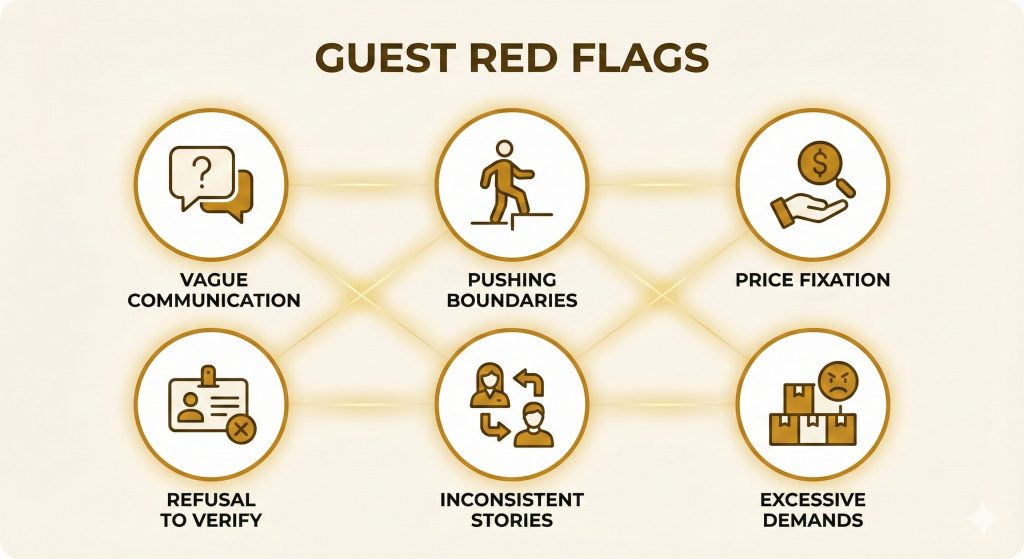
Red Flag #1: Vague or Evasive Communication
Good guests ask clear questions. Not perfect questions. Just clear ones.
Trouble tends to arrive wrapped in vague language. Messages that avoid specifics. Requests that feel half-formed. Or long explanations that somehow never answer the original question.
Examples include:
- “We might arrive late or early, not sure yet.”
- “It will probably just be us.”
- “We are very quiet, but also celebrating something small.”
None of these are deal-breakers on their own. But patterns matter.
Clear communication early usually predicts respectful behavior later. That is why clear pre-arrival guest messaging that sets expectations early is not just helpful. It is protective.
When guests resist clarity, they often resist rules too.
Red Flag #2: Pushing Boundaries Before They Even Arrive
Some guests test limits immediately. Extra guests. Extra cars. Extra favors.
The phrasing is often polite. Even friendly. That makes it easier to overlook.
“Is it okay if a friend stops by briefly?”
“Would it be possible to bend the check-out time just this once?”
“We will be careful, but the dog is very calm.”
Sometimes these requests are harmless. Sometimes they are the opening move.
What matters is how guests respond to a firm, calm boundary. Respectful guests accept it. Problem guests negotiate. Or circle back later hoping for a different answer.
That behavior rarely improves after check-in.
Red Flag #3: Over-Focus on Price and Discounts
Everyone cares about price. That is normal.
But guests who fixate on discounts, refunds, or exceptions before booking often continue that focus during the stay. And after it.
Requests for off-platform deals. Pressure for last-minute reductions. Complaints framed as leverage.
This does not mean budget travelers are bad guests. Many are excellent.
It does mean that when the conversation centers almost entirely on cost, the stay may come with higher emotional labor. And possibly disputes.
Pricing tools can protect revenue. Screening protects time.
Red Flag #4: Refusal to Complete Verification Steps
Legitimate guests understand basic verification. ID checks. Signed agreements. Platform requirements.
Guests who resist these steps tend to frame it as inconvenience or mistrust.
“I have never had to do this before.”
“Is this really necessary?”
“Can we skip that part?”
The answer should be yes, it is necessary.
This is where guest screening processes that protect vacation rental properties quietly do their best work. They filter out risk without confrontation. Or drama.
It is not personal. It is procedural.
Red Flag #5: Inconsistent Guest Counts or Stories
Details matter. Especially when they change.
One message says two guests. Another mentions family visiting. A third casually adds children or coworkers.
Again, flexibility is part of hospitality. But inconsistency before arrival often predicts inconsistency during the stay.
Extra guests impact noise, wear, utilities, and compliance. Especially in regulated markets.
In cities like Seattle, occupancy rules are not suggestions. That makes understanding local short-term rental rules before guest arrival essential, not optional.
Red Flag #6: Excessive Pre-Arrival Demands
Questions are good. Demands are different.
Guests who request multiple customizations before arrival often expect the same level of accommodation throughout the stay. And may escalate dissatisfaction when reality does not match imagination.
This can include:
- Furniture rearrangements
- Appliance substitutions
- Amenity guarantees that go beyond the listing
It is reasonable to clarify what is and is not included. It is also reasonable to notice when expectations are drifting into entitlement.
The listing should do most of the talking.
Which is why accurate listing descriptions that prevent guest misunderstandings matter more than clever wording.
Red Flag #7: Poor Review History or Strategic Silence
Reviews tell stories. Sometimes quietly.
A guest with consistently neutral reviews. A pattern of “communication issues.” Or hosts praising cleanliness while hinting at stress.
Even silence can matter. A long booking history with few reviews may signal off-platform disputes or removed feedback.
No single review defines a guest. But trends are hard to ignore.
This is also where experienced property managers tend to trust instinct backed by data. They have seen how small signals add up.
Red Flag #8: Booking for “Someone Else”
Third-party bookings are risky. Sometimes legitimate. Often not.
Friends booking for friends. Parents booking for adult children. Employers booking for teams.
These arrangements complicate accountability. Who read the rules. Who is responsible. Who answers when issues arise.
Clear policies help. So does sticking to them.
This ties closely to setting guest expectations through consistent house rules, which reduces confusion when multiple parties are involved.
Technology Helps, But Judgment Still Matters
Automated screening tools can flag risk patterns. Message templates can standardize responses. Platforms can enforce requirements.
But technology does not replace judgment.
This is where property managers often add value. They read between the lines. They recognize patterns faster. They intervene early.
Especially for hosts managing multiple listings, outsourcing this layer can prevent costly mistakes. Or at least reduce how often they happen.
Not Every Red Flag Means “No”
This part matters.
A red flag is not a verdict. It is a signal. Some guests simply communicate poorly. Others are unfamiliar with short-term rentals. A few are nervous travelers.
The goal is not to reject everyone who asks questions. It is to notice patterns. Respond consistently. And protect the experience for everyone involved.
Good hosting is not about being suspicious. It is about being prepared.
The Quiet Benefit of Screening Well
When red flags are addressed early, stays tend to run smoother. Reviews improve. Stress drops.
Guests who respect boundaries often appreciate clarity. They know what to expect. They follow rules because they were communicated calmly and early.
That is the kind of stay that benefits everyone.
A Thoughtful Way Forward
Short-term rentals are increasingly professionalized. That includes how guests are evaluated, not just how properties are presented.
Spotting red flags before check-in is not about control. It is about sustainability.
At Book It Vacation Rentals, we believe good hosting starts long before arrival. We have seen how early screening, clear communication, and consistent systems prevent most problems before they start. For hosts who want fewer surprises and better stays, working together is often the simplest safeguard.
FAQs
What are common red flags when booking a vacation rental?
A: Vague communication, pushing rules, inconsistent guest details, and resistance to verification are common warning signs.
Should hosts reject guests with red flags automatically?
A: Not always. Red flags indicate risk, not certainty. Patterns and responses matter more than single signals.
How can hosts screen guests more effectively?
A: Clear messaging, verification steps, review analysis, and consistent policies reduce risk significantly.
Do property managers help with guest screening?
A: Yes. Experienced property managers often recognize issues early and handle communication before problems escalate.
Can technology replace guest screening judgment?
A: Technology helps flag risks, but human judgment remains essential for context and decision-making.